Intro
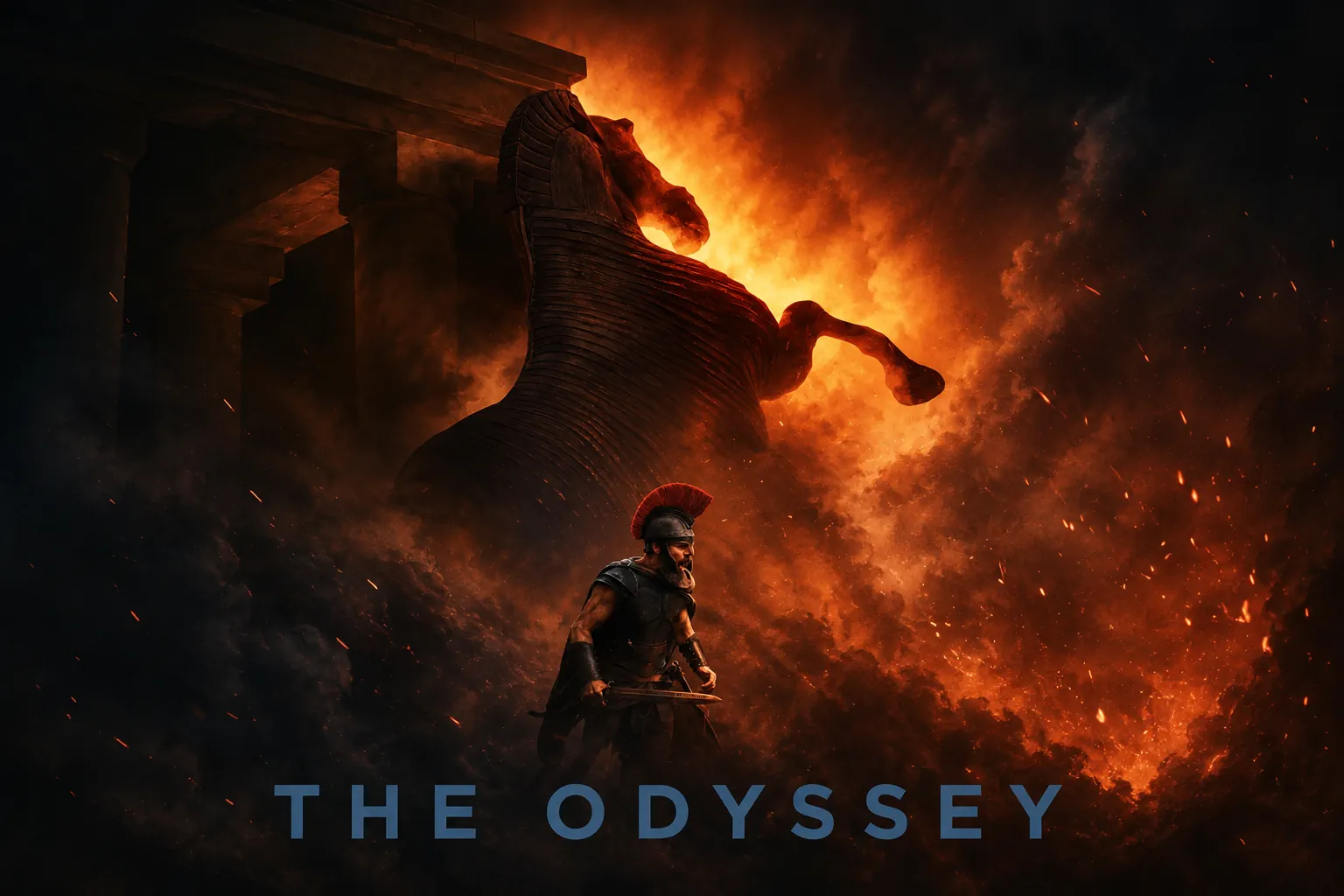
Last week I had the pleasure of watching Christopher Nolan’s The Odyssey in Helsinki, and little did I know that it would turn into THE best film experience of my life so far. The artistry and the sheer scale of the movie prompted me to write about it, and in doing so try to dissect the experience and see what makes it feel so special. Turns out, the movie was just as successful with its epic depiction of Odysseus’s journey as it was with conveying a brilliant message about trust, humanity, and the meaning of home.
The Story
Homer’s The Odyssey—the source material for the film—is as old a story as they come, and being a fan of Greek mythology I already knew the major plot points in the story beforehand. Incredibly, that didn’t hurt my movie experience or the sense of suspense, since you never know how faithful an adapted screenplay is going to be to the original material.
The genius of adapting such an old story is that it feels safe and familiar to the audience, yet the nature of doing an adaptation means they are bound to be surprised by how the film deviates from the story they thought they knew. That said, I found the story to be faithful enough and yet strikingly original in its interpretation of Odysseus’s journey from Troy back home, and that, I believe, creates the perfect mix of familiarity and novelty when it comes to a product/work of art being accepted by a large audience.
What makes the movie’s story so special is the key places where Nolan has consciously decided to suggest an interpretation of the classic work that elevates it from the realm of fairy tales and impossible, perfect heroes to the world of real humans. In other words, it’s not just about a brave king coming home after a heroic conquest. It’s also about consequences, and what it truly means to come home.
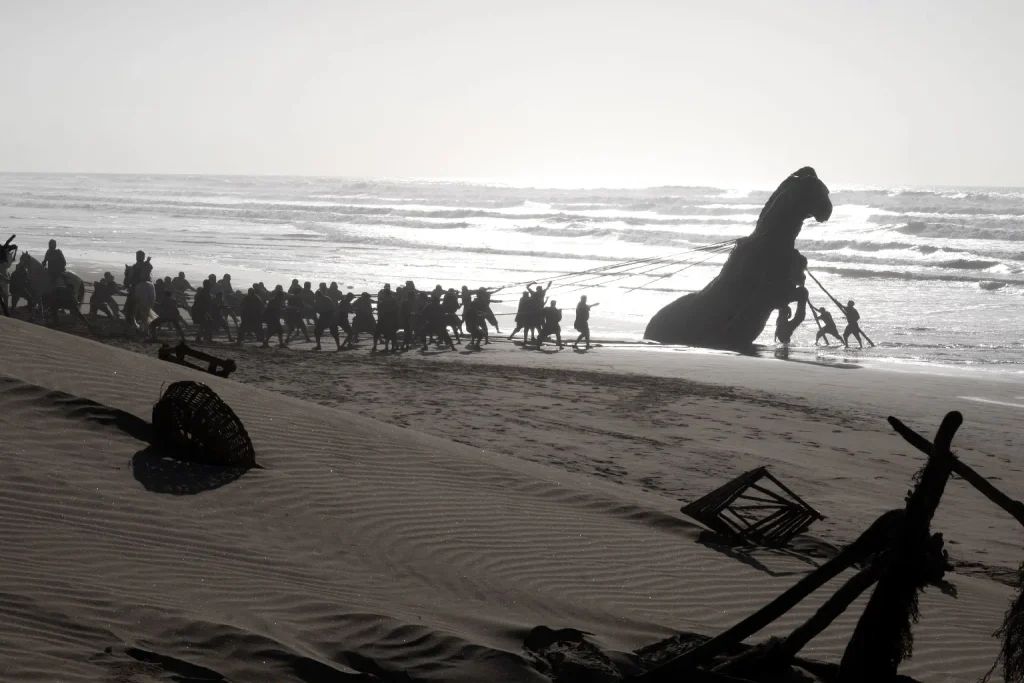
I was conditioned to think that the Trojan Horse was a brilliant strategy employed by the “good guys” to finally break through the gates of Troy—the city of the “enemies”. In Nolan’s interpretation, the Trojan War happens because of politics and the need for more economic control, and the Trojan Horse is a shameful last-resort attempt at getting what the invading army wanted by abusing the only thing that makes us civilized: trust. By breaking the sacredness of trust, Odysseus shakes the foundations of his era’s civilization, and is punished for it, both by the outside world and, most importantly, himself.
That leads to the biggest question posed by the film: what does it truly mean to come home? The definition of home is rooted in trust and safety, and when your decisions have shaken the foundations of the value humans put in trust, you might want to have a self-imposed period of exile to think it over before you head back. Break the bond of trust, and you might well come back home to find it on the brink of collapse. On top of all that, twenty years away from home means neither you nor your “home” is the same anymore—the journey back is also about redefining what home means to you. Turns out, it’s not about going back and living happily ever after, as we have come to expect.
The Filmmaking
As I touched on earlier, the story is one that we have heard before, no matter how many liberties the screenwriter has taken in their interpretation of it. What makes the story truly shine is the masterful filmmaking put to work. After watching it, for the first time in my life, I deeply understood why some people decide to become filmmakers.
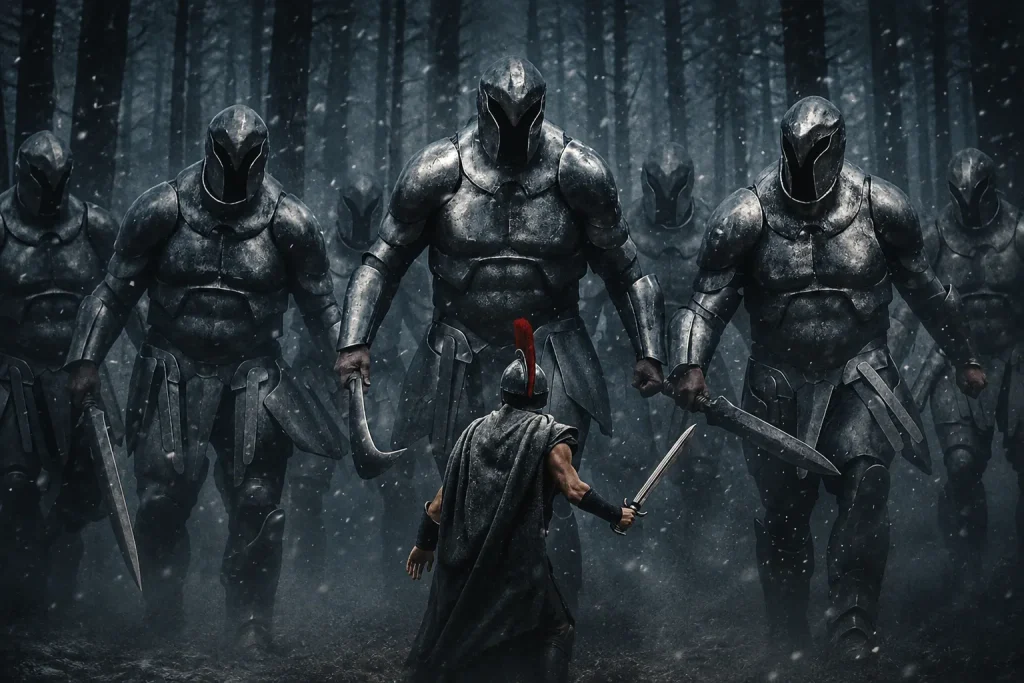
The film is overflowing with epic grandeur and spectacle, through and through. So many of the shots are works of art in their own right, even if you don’t consider them as part of a bigger whole that is the movie. Usually, when a movie is so long (it’s close to three hours), I find myself frequently checking the time to see how much of it is left. Incredibly, with The Odyssey not only did I not look at the time, but I was actually worried about the fact that it was going to end at some point. It’s rare for a film to be deep and so engaging at the same time.
One thing of note is that I almost didn’t expect to see giants and monsters in a Nolan film, worrying that he might want to take all the mythology out of the story and make it completely realistic and human. So I was pleasantly surprised to learn that the film stays faithful to those aspects of the story as well, with believable depictions of such otherworldly phenomena using the practical visual effects Nolan is known for.
I should also tell you that I had the privilege of watching the movie in the special 70mm film version with the taller aspect ratio, and that made the experience even more magical. If you have the chance, you should by all means do the same!
A Note on the Controversies
The controversies surrounding the film (i.e. choice of actors, liberal agenda) hit me well before I decided to watch it, and actually hurt my expectations of it a bit. Having watched it now, I can say that all those complaints about the choice of actors and trying to advance an “agenda” seem pointless and petty to think about (that is many ways similar to how I felt about all the hate The Last of Us Part II got). As far as the movie is concerned, all the actors were great fits for their roles, and it is reasonable for an artist to feel entitled and even required to speak their mind on the issues that they believe need to be addressed in today’s world. That is, in fact, a very responsible approach to art.
Final Thoughts
I learned after watching the film that Nolan was actually set to direct the movie Troy from back in 2004, but that Warner Bros. changed their minds and decided to go with Wolfgang Petersen instead. The implication of that is that Nolan has been thinking on and off about some parts of the story for at least the past twenty years. There is something special about letting an idea sit and mature for decades, and as an artist, to finally realize it and do it justice. The result is a culmination of Nolan’s masterful filmmaking, and it is an absolute blast to watch on the big screen.
Leave a Reply